
What is zero stop on a scope, in plain words
The elevation turret moves the reticle up for longer distances, one click at a time. Every time you dial up, you have to come back down to your zero, and on a turret that turns more than once around, it's easy to stop a full turn off and never notice. A scope zero stop is a physical stop inside the turret that blocks it from turning below the point you set. Turn it down until it stops, and you're back at zero. Some designs leave a few clicks below zero on purpose, so there's room for small changes later.
That's the whole idea: a mechanical way to keep from dialing below your zero and to confirm by feel that the knob is all the way down. If you've ever asked "what is zero stop on a rifle scope for, if I can just count clicks?", the answer is the moments when counting goes wrong: cold hands, bad light, a hurried string of shots, or a turret with marks that repeat on every turn. A stop doesn't care how tired you are.
What a scope zero stop does and doesn't do
Because the stop sits right next to the zero, people sometimes expect more from it than it gives. It's worth being clear on both sides, since a scope zero stop that's set wrong can feel just as reassuring as one that's set right. The list below is the short version, and the last item is the one that catches people out most often.
What it changes, and what it doesn't
It does
Let you return to zero by feel, without counting clicks or reading marks.
It does
Keep you from getting lost a full turn below zero on a multi-turn turret.
It doesn't
Change where the rifle hits. Only the zero you shot does that.
It doesn't
Tell you the zero is still good. Only a group on paper does.
It doesn't
Add elevation. The travel above zero is the same with or without it.
It doesn't
Follow a new zero by itself. Change the zero, and the stop has to be set again.
So who actually uses it? Mostly shooters who dial a come-up for each distance and then return, like someone at a steel match spinning up for the far plates and back down between stages. A hunter who leaves the turret at zero all season and holds in the reticle may never touch it. Neither way is wrong, and this guide doesn't weigh in on which scope or setup you should own. It only covers how the feature works and how to keep track of it once it's set.
How a scope zero stop is generally set
Designs differ from scope to scope: some use shims or a stop ring under the turret cap, some an internal gear, and some set themselves when the dial is tightened back down. So the first step is always the same: check your scope's manual, and follow it over anything here. Most designs still follow the same basic pattern, which is worth knowing so the manual's steps make sense when you read them.
The common pattern for setting a zero stop
Zero the rifle first
The stop marks a zero you've already proven, so the groups come before the tools.
Loosen the dial, not the setting
Usually a few small screws or a center screw free the dial without turning the turret underneath.
Line up the 0
Turn the loose dial so its 0 sits on the index mark, then lift or slip it as the manual describes.
Set the stop
Move the stop down until it rests where the manual says, whether that's a ring, shims or the dial itself.
Tighten and test
Dial up a full turn, come back down, and check it stops at 0 or the few clicks below your design allows.
Confirm with a group
If the turret turned while the dial was loose, the zero moved, and only paper will show it.
Never force a turret against its stop, either while setting it or later at the bench; a stop is a reference, not a lever. The confirming group matters more than it looks. It's the one step that tells you the zero and the stop still agree, and it's easy to skip when the tools are already out and the light is going. If you need a refresher on the groups themselves, the guide on how to zero a rifle scope walks through the loop.
Zero stop, elevation travel and your dope
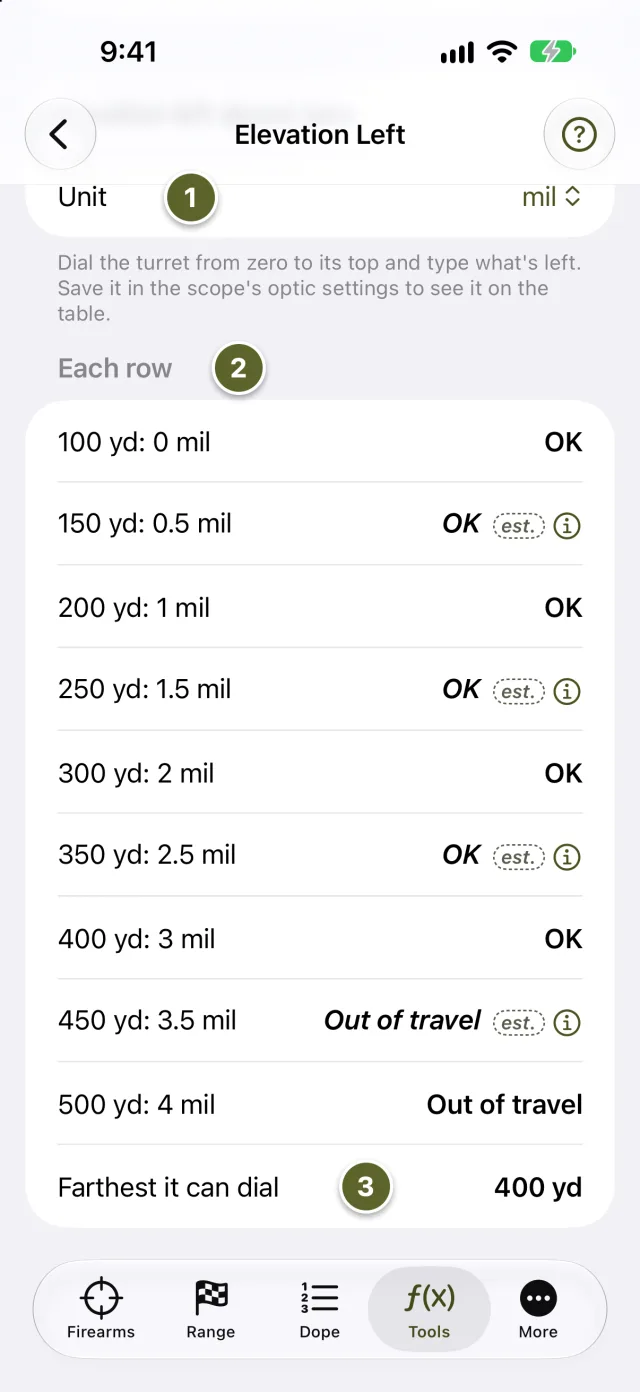
Once the stop sits at your zero, the turret's travel above zero is all you can dial. Many shooters are surprised by how little of a scope's total travel is left up there. The usual way to measure it: with the rifle zeroed, count the clicks from zero to the top of the elevation turret's travel without forcing it, multiply by the click value, and dial back to zero after. Gun Diary's free Elevation Left calculator compares that number with each come-up on a dope table and names the farthest row the scope can dial.
A different scope zero stop setting doesn't change the travel, but a new zero, a new mount or a new scope does, so measure it again after any of those. Mil and MOA scopes count clicks differently, and if the units ever get mixed up, the guide to mil vs MOA sorts them out. Everything in the calculator is plain arithmetic on your own numbers; it never works out where a bullet will go.
27 calculators, your numbers.
What to write down once the zero stop is set
A zero stop is set once and then forgotten, which is exactly why it's worth a note. Months later, after a remount or a borrowed rifle comes home, nobody remembers whether the stop was reset or how many clicks below zero it allows. A few lines written the day you set it answer those questions before they cost you a morning at the range.
Worth writing down beside the zero stop
Date and zero distance
The zero the stop was set on, with its unit.
Ammunition and lot
What the rifle was zeroed with when the stop was set.
Clicks below zero
How many the design allows past the stop, if any.
Click value and elevation left
What one click moves and how much the turret can dial above zero.
The confirming group
Where it landed after the stop was set, so you know they agreed.
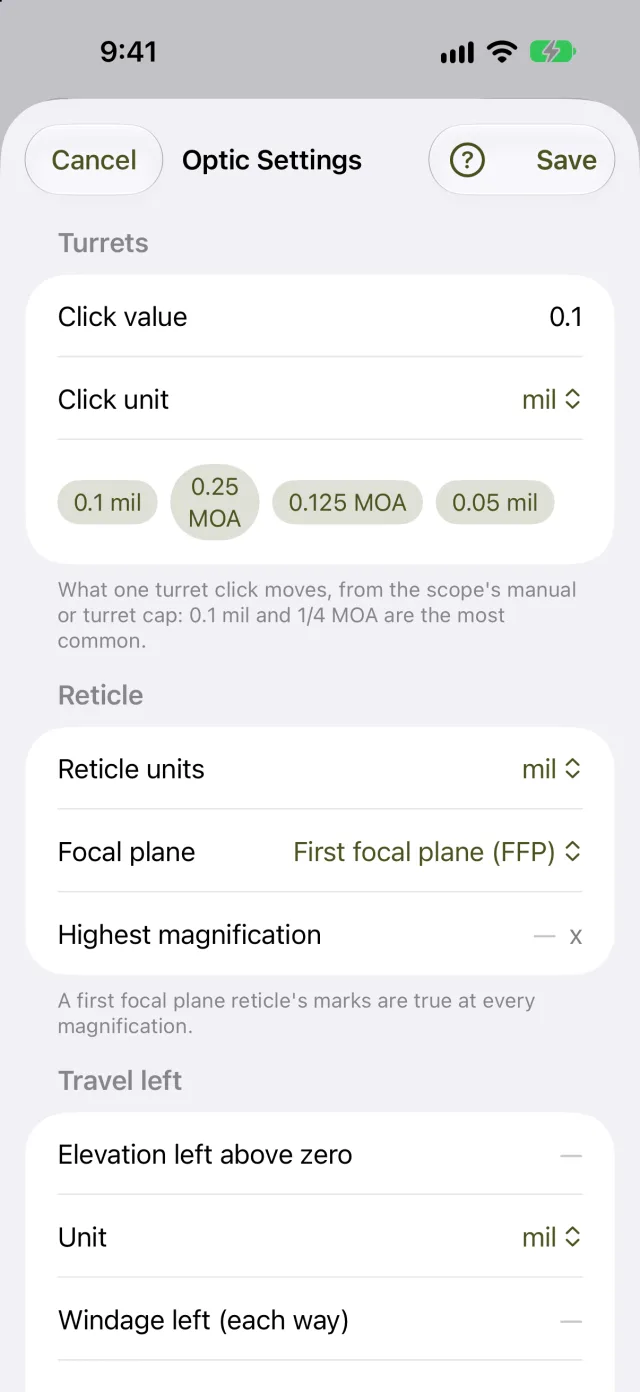
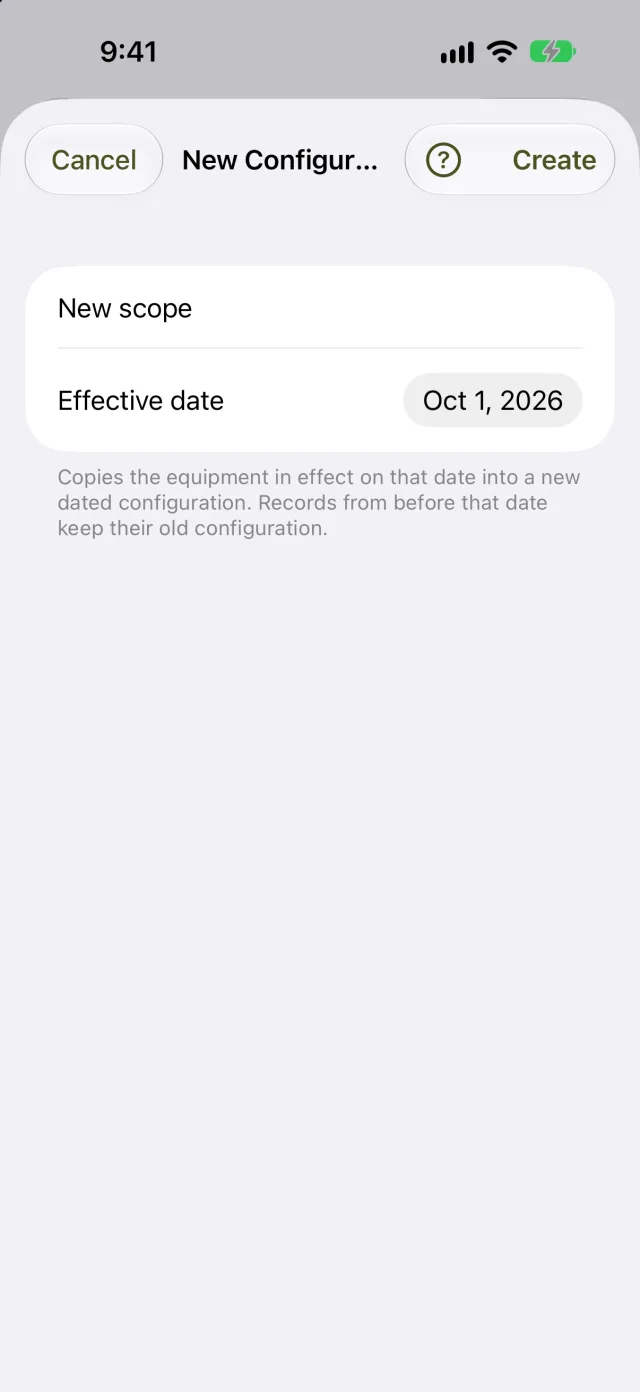
In Gun Diary, the scope's facts live in The Garage's firearm history. Its optic settings hold the click value and the elevation left above zero, and their Notes take the turret type and the zero stop setting. A Zero Check saves the confirming group as a dated zero record. After a scope or mount change, the old dope is marked earlier setup so it's never passed off as current. Your records stay in your own iCloud, with no account and nothing sent to us.
The bottom line
So, is a scope zero stop worth setting?
If you dial for distance and come back down, a scope zero stop saves you from the lost turn and the counted-wrong click, especially in poor light. If you rarely touch the turret, it matters less. Either way, it never replaces a group on paper: set it after a proven zero, confirm with one more group, and write down the date, the clicks below zero and the elevation left. A dot has no turret to stop, so if you also shoot one, see how to zero a red dot for its own loop, and why the cold bore shot is worth logging apart.
Gun Diary keeps the records you enter. It never predicts bullet drop, wind or a trajectory; your dope is what you proved on paper. Always follow safe firearm handling.
Swapped the scope?
The old dope is marked "earlier setup" and set aside, never passed off as current. Start a new table and prove it again. One firearm free.
See dope cardsComing soon to the App Store