
Why keep a shot-by-shot record
A hunting journal tells the story of the day. A shot record tells you what happened when it counted, and it's the part people struggle most to rebuild later. Was it 240 yards or 280? Did you hold or dial, and was the follow-up needed? Written down the same day, those answers become something you can check against your dope and your practice. Left to memory, they quietly change a little every time the story is told.
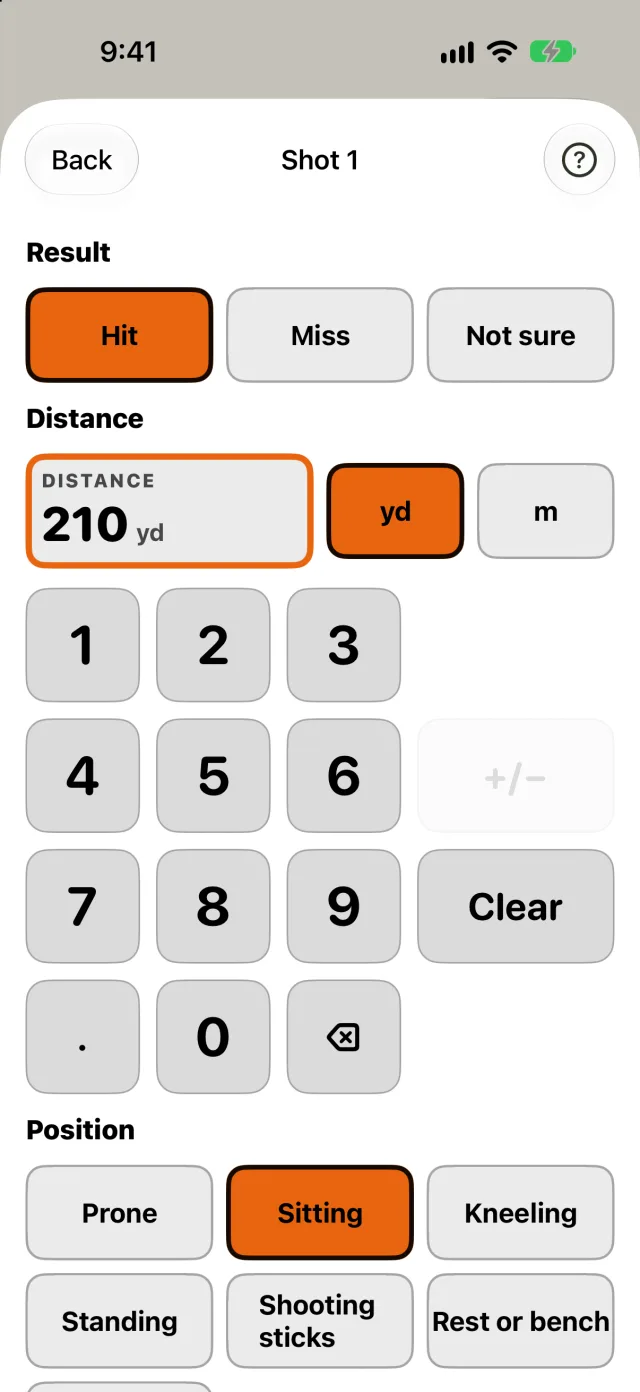
What to record in a hunting log for each shot
Keep the same five fields for every shot, hit or miss. They're short enough to fill in at the truck with cold hands, and consistent enough that one season can be compared with the next. We won't tell you what distance or hold is right for your rifle; that's yours to prove at the range. A hunting log's job is to keep an honest account of what you actually did.
Five things to log for every shot
Result
Hit, miss or not sure. "Not sure" is an honest answer, and worth keeping.
Distance
In yards or meters, the way you measured it at the time.
Position
Prone, sitting, kneeling, standing, shooting sticks or a rest.
Follow-up shots
How many more shots went at the same animal.
Hold or dope used
The dope row you dialed, or the hold in your own words.
Add the date, the firearm and the ammunition once for the hunt, and each shot inherits them. If you took an animal, the harvest goes with the hits: species, tag number and weight. Anything that doesn't fit a field, like a branch you had to clear or wind you noticed, goes in the notes. What a tag or harvest report must include is up to your state wildlife agency, and the Association of Fish and Wildlife Agencies is a starting point for finding yours.
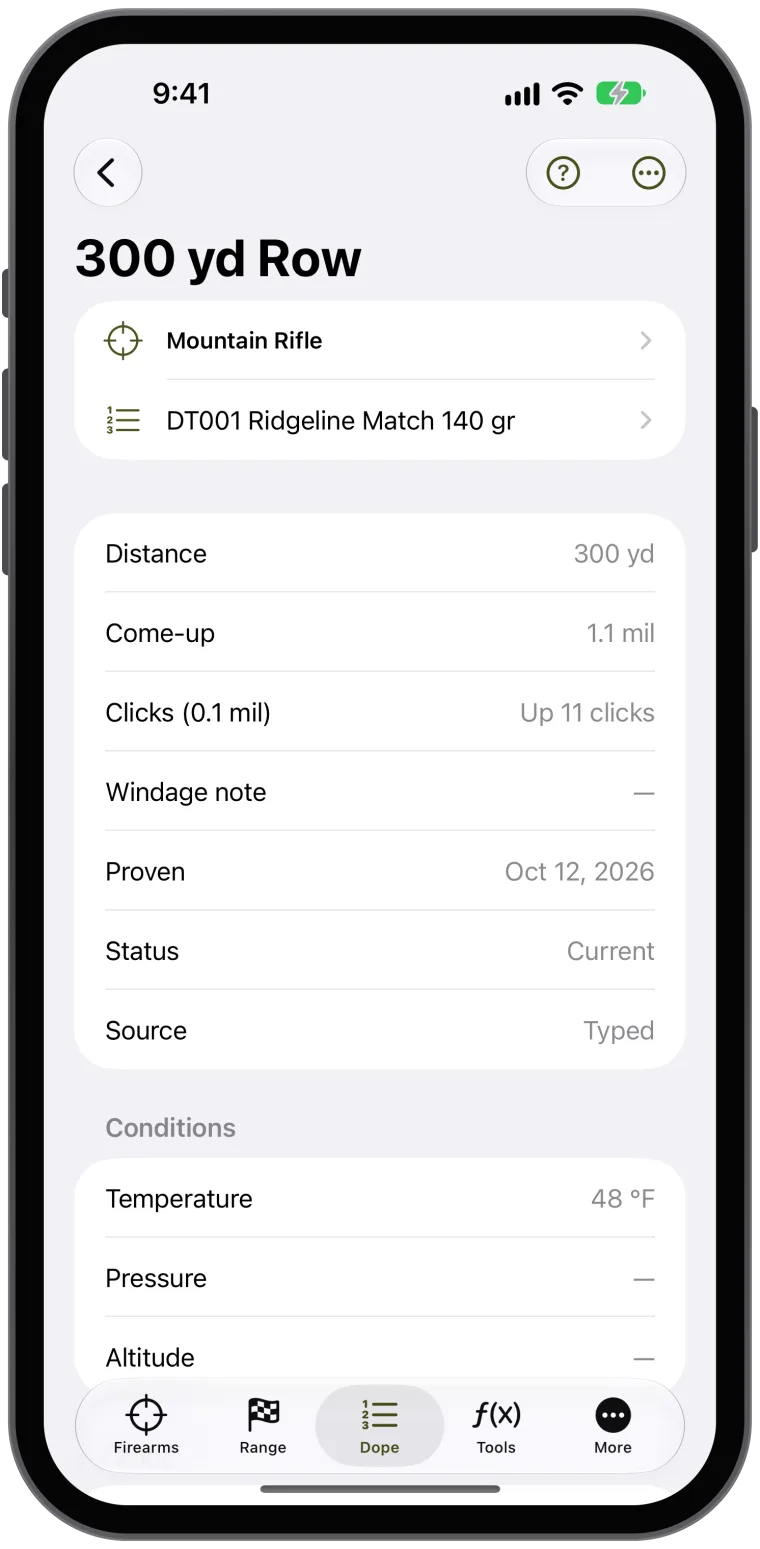
Linking each shot to the dope you used
The most useful field is the last one. When you dialed or held from your dope card, the hunting log should say which row, something like "300 yd: 1.1 mil up" from the firearm's own table. Over a few seasons, those links show which distances your dope has proved in the field and not only at the bench. If you held by eye, write the hold in words instead, like "held top of back". Both are honest records; only the first can be checked against the table later.
In Gun Diary, the Hold or dope used field lets you tap one of the firearm's current confirmed dope rows or type the hold. It's also why a Zero Check before the season is worth saving: the hunt then has proof the rifle was on. The screens on this page show the app's demo diary, with a made-up rifle, ammunition and dope, so the numbers are examples and not anyone's real dope.
How Quick Hunt Log keeps the record
Quick Hunt Log is built for after the hunt, back at the truck or at home, never during a shot. You pick the firearm and ammunition, set the date, type a general area if you like, then tap Add a Shot for each shot and fill in the five fields on big buttons. Save Hunt turns it into a hunting session. Every shot plus its follow-ups is added to the rifle's round counters once, so nothing is counted twice.
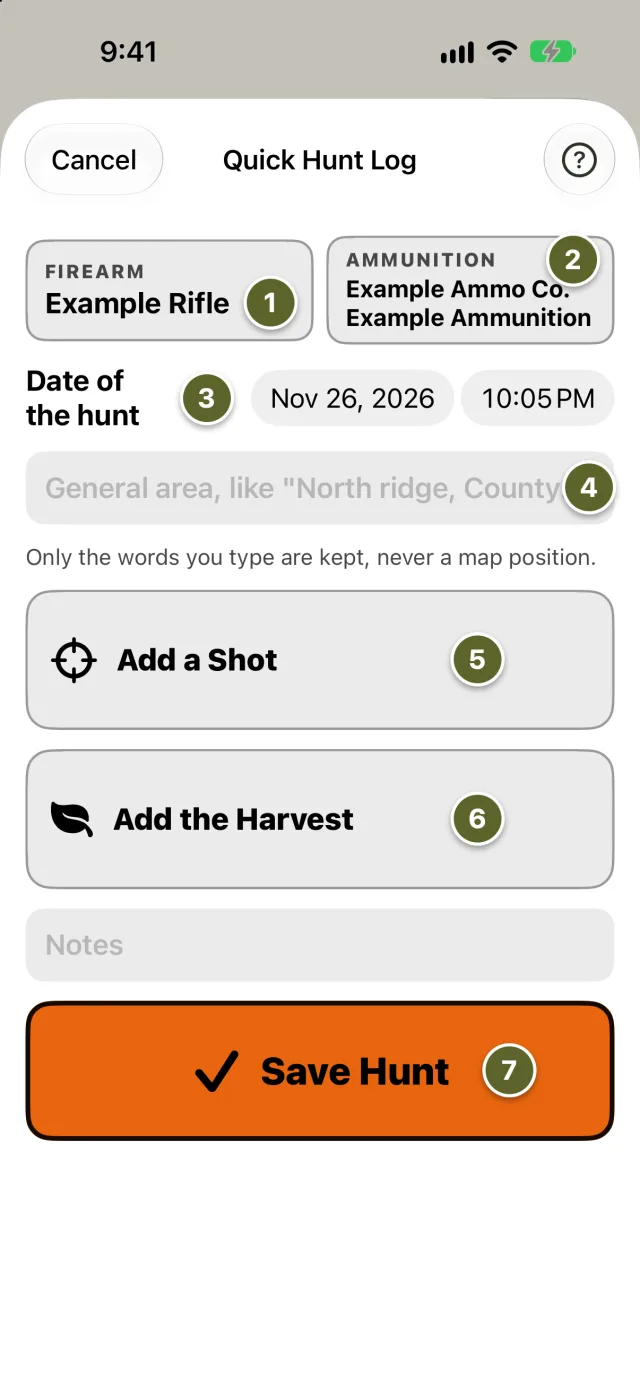
You can change a shot later from the session, or add one you forgot. Deleting a hunt shot doesn't change the session's rounds, on purpose; you edit Rounds fired on the session if it needs fixing. The general area stays words, never a map position, and like everything else in the diary it lives on your iPhone or iPad and in your own iCloud, with no account and nothing sent to us.
Questions? See the Help Center.
A paper hunting log book or an app?
Paper does this job fine if you keep it up, and some hunters like the feel of it. If you're drawing up a hunting log book template, give it columns for the date, the general area, the result, the distance, the position, follow-up shots and the hold, plus a line for the harvest. The trouble with paper comes later: rain, a lost notebook, and no quick way to find every shot from one rifle without reading every page. An app keeps the same fields and adds search and links.
On the phone, the Hunt Log lists every hunt by season with its shots and harvests. The Hunt Log report exports the season with each shot's distance, hold, position, result and follow-ups in its own column; the spreadsheet is free and the PDF is part of Gun Diary Pro. Export All Data, free forever, takes everything with you. If you hunt deer, our guide to keeping a deer journal covers the harvest side in more depth. For ducks and geese, our waterfowl hunting log book guide covers what to write after each hunt.
The bottom line
So, what belongs in a hunting log?
For every shot: the result, the distance, your position, any follow-up shots and the hold or dope row you used, written the same day, misses included. Add the firearm, ammunition, date and a general area once for the hunt, and the harvest when there is one. That's a hunting log you can learn from season after season, whether it's in a notebook or on your phone. Gun Diary keeps it with the rifle's dope and round counts, and one firearm is free.
Gun Diary keeps the records you enter. It never predicts bullet drop, wind or a trajectory; your dope is what you proved on paper. Always follow safe firearm handling.
Every shot and harvest, linked to the dope you used
Zero Check before the hunt and Quick Hunt Log after it. Your spot stays words, never a map pin.
See Zero Check and the hunt logComing soon to the App Store