
What an ammo lot number is
A lot is one production run of an ammunition. The maker loads a batch, then prints that batch's code on every box and case that came from it. That code is the ammo lot number. It's usually a short mix of letters and numbers, stamped or printed on the end flap of the box or on the case label, and it's often small enough to miss. Two boxes can share the same maker, product line, cartridge and bullet weight and still carry different lot numbers, because they came off the line at different times.
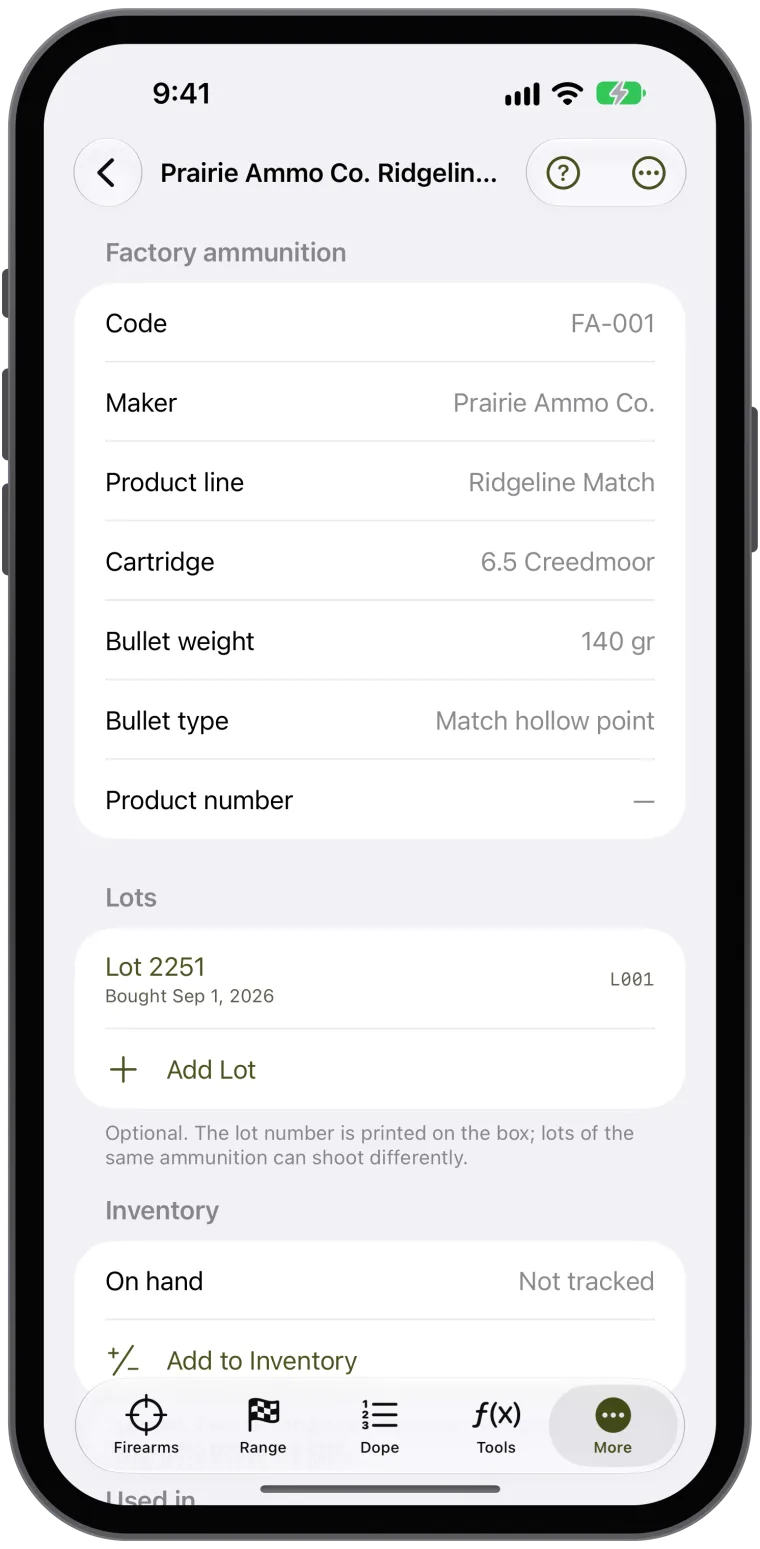
Makers don't promise that every batch is identical. Components come in their own batches, machines are set up again, and small differences add up. Two lots of the same factory ammunition can shoot a little differently, both in speed and in where they hit, and the difference tends to show more as distance grows. In USPSA, that speed also feeds the power factor a match chronograph checks. You can't see it by looking at the box. You can only see it in your own records, and only if those records say which lot you were shooting.
When the lot number matters, and when it doesn't
Not every shooter needs to track lots, and that's fine. If you shoot a box of practice ammunition on a Saturday afternoon and don't keep numbers, the lot may never come up. It starts to matter as soon as you rely on a record to mean something later: a dope card, a zero you checked, or a comparison between two kinds of ammunition. In those cases the ammo lot number is part of what the record was proven with, just like the rifle and the scope.
Shooters who usually record the lot
Long-range shooters
Dope proven with one lot names that lot, so when a new case arrives they know which rows were proven with what.
Hunters
Noting the lot used to check zero before the season means a box from a different lot is easy to spot.
Anyone testing factory ammunition
Comparing lots, not only products, shows whether a change in groups came from the batch.
Competitors
Testing a few lots before buying more of one is only useful if each group says which lot it was.
There's also a plain record-keeping reason. If a box ever gave you trouble, such as hard extraction or a round that didn't fire, the lot number ties your note to the exact batch. That's a log, not a diagnosis; whether anything is safe to shoot is a question for the maker, not your diary.
Proof, not predictions.
Where to look for the lot number on ammo box ends and cases
It's usually printed or stamped on one end flap, on the bottom, or on a sticker on the outer case. It may be labelled "lot", or it may just be a code with no label at all. Because the ammo lot number is small and easy to mistype, the simplest habit is to photograph the box end or case label when you open a new case, and type the number from the photo. If a case turns out to hold boxes from two lots, record both rather than guessing which one you shot.
How to record the ammo lot number with every group
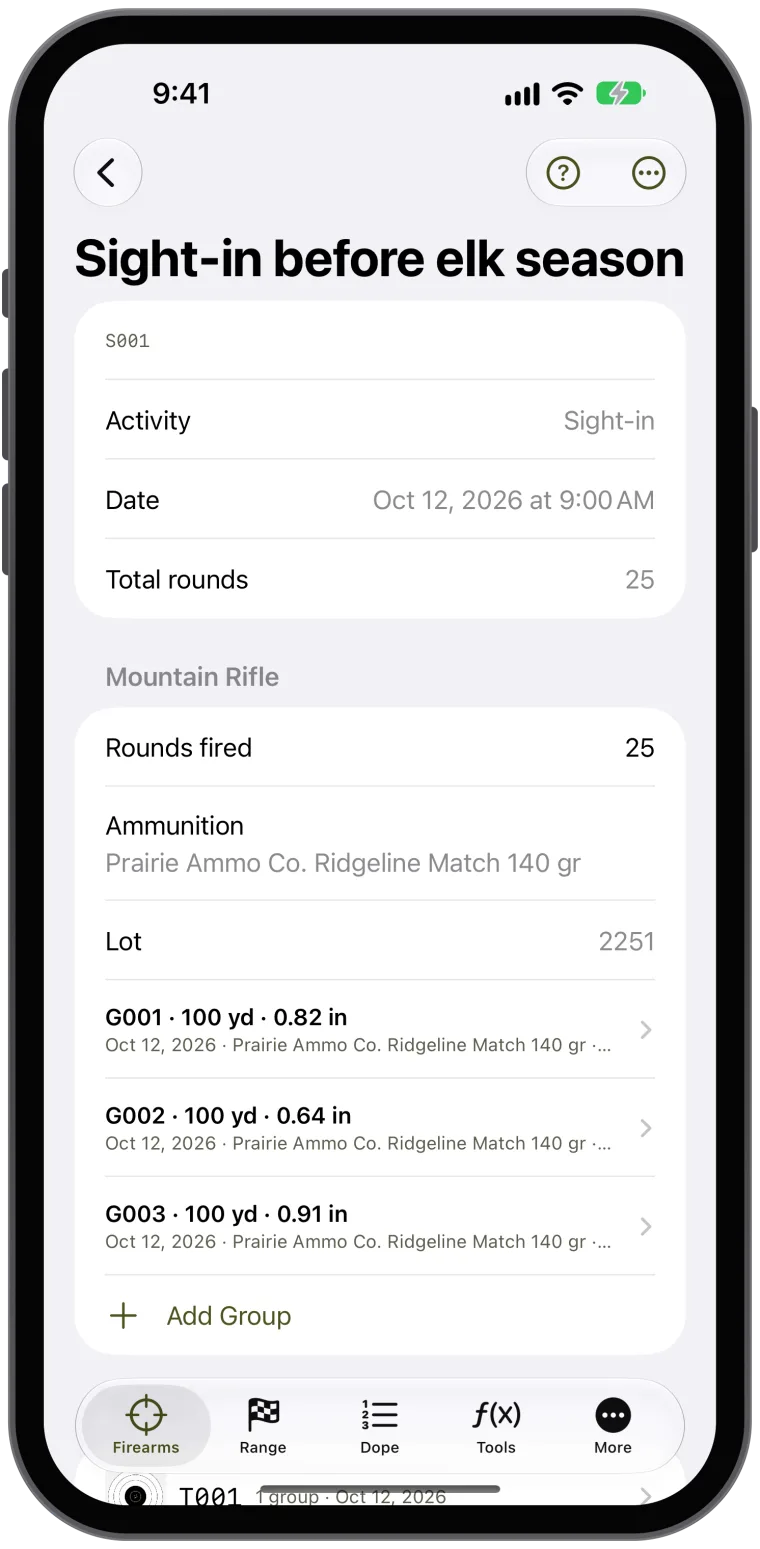
In Gun Diary, each ammunition in your Ammo Library can hold its lots. A lot keeps the number on the box (up to 40 characters, typed in capitals), the date you bought it, box photos and notes, and gets its own code that's never reused in your diary. Once an ammunition has lots, a Lot row appears when you record a group, a session, a dope table or a Zero Check, so you pick the lot from the box at the bench instead of typing it again. The help article on ammunition lots has the steps.
When a case runs out, you can archive its lot. It leaves the pickers, so new entries offer only the lot you're shooting now, but old groups and sessions keep showing the lot they were shot with. A lot filed under the wrong ammunition can be moved, with its sessions, groups and boxes on hand going with it. Lots are optional, so a casual shooter can skip them entirely and add them later if they start to matter. Your records stay on your iPhone or iPad and in your own iCloud, with no account and nothing sent to us.
Comparing lots from your own groups
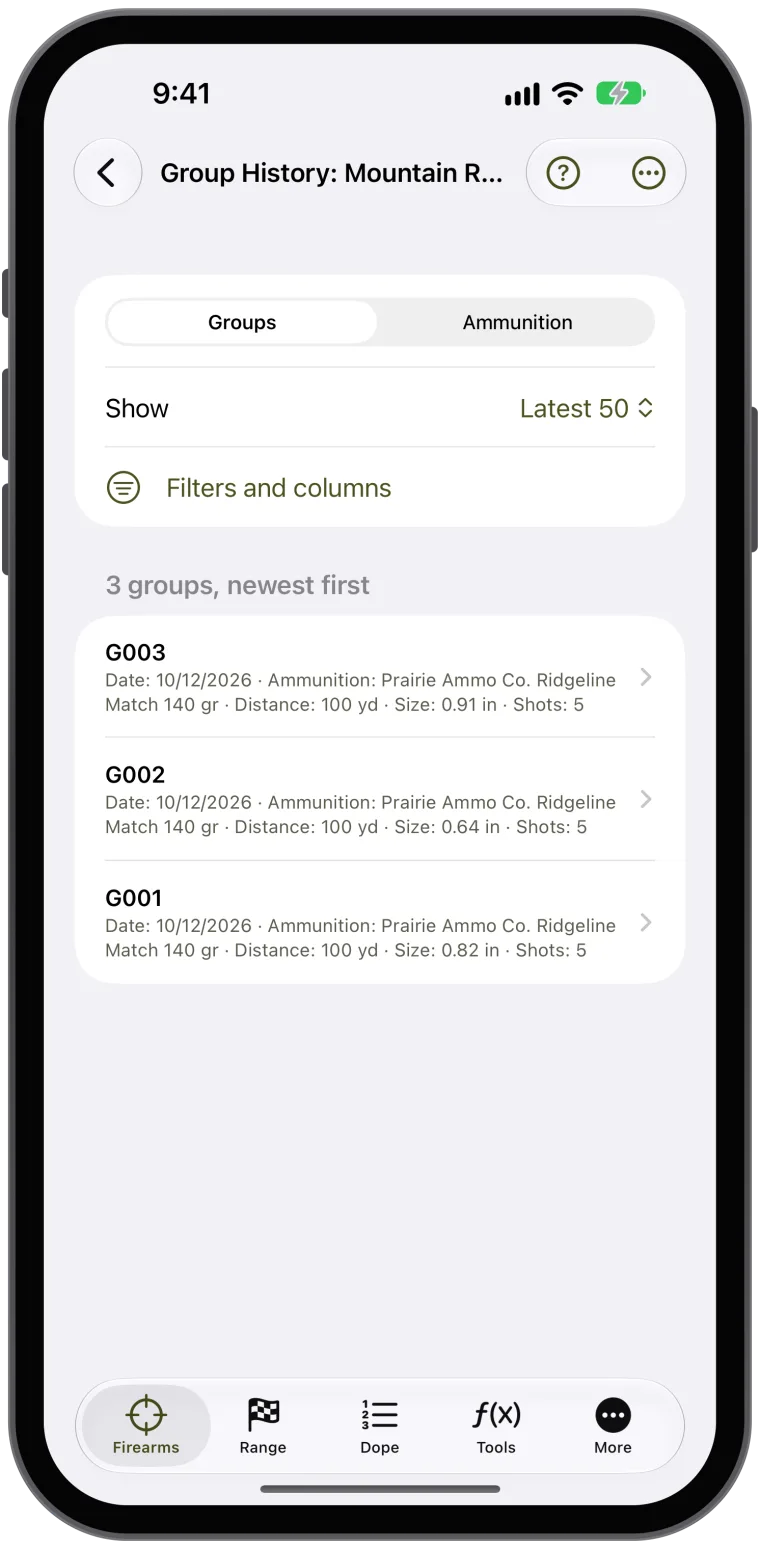
Recording the lot pays off when you look back. Group History has a Lot column, and Ammo Comparison can switch from one row per ammunition to one row per lot, with the number of groups, average size, mean radius, velocity and SD for each. Here's how it looks in the app's demo diary: a first case of a made-up match ammunition, lot 24A-118, averages 2695 fps, and the next case, lot 25C-041, averages 2712 fps in its first groups. The app doesn't rank lots or tell you what that difference means. It just puts your own averages side by side; standard deviation and range are explained well in NIST's handbook on measures of spread.
Dope tables can name the lot too. When dope proven with one lot sits in your table and you switch to a new case, the record shows exactly which lot proved each row, which is the information you need to decide what to confirm again at the range. That decision is yours; the diary's job is to make sure the facts behind it are written down and easy to find. The screenshots on this page are from the demo diary, with made-up firearms, makers and numbers.
The bottom line
So, does the ammo lot number matter?
For plinking with no records, not much. For anything you'll rely on later, yes: the ammo lot number is part of what your groups, your zero checks and your dope were proven with. Photograph the box end when you open a case, record the lot with each group, and archive it when the case is gone. It takes seconds at the bench, and it's the one detail you can't recover afterward if the box went in the trash.
Gun Diary keeps the records you enter. It never predicts bullet drop, wind or a trajectory; your dope is what you proved on paper. Always follow safe firearm handling.
One firearm free, forever
Every diary unlimited, all 27 calculators, the pocket dope card and free export. Add Pro when you add a firearm.
See pricingComing soon to the App Store