
The two approved USPSA paper targets
The USPSA rulebook, section 4.2, approves two kinds of cardboard target: the USPSA target and the IPSC target. Shooters often call the first the metric target, the tall one with a head, and the second the classic, the eight-sided one with no head. A stage can use one kind or the other, never both. Half-size versions of either are approved at every match level and can share a stage with full-size targets of the same kind. The screens in this guide come from Gun Diary's demo diary, so the numbers on them are made up.
USPSA target dimensions, zone by zone
The target diagrams in Appendix B1 give the USPSA target dimensions in inches, and the decimals look odd for a reason: the target is drawn in millimeters. The A zone's 5.91 inches is 150 mm, its 11.02 inches is 280 mm, and the overall 17.72 by 29.53 inches is 450 by 750 mm. So if a measurement on a box of targets reads 6 by 11, it's the same zone, rounded. Every scoring area is marked with a line, and a non-scoring border runs all the way around the edge.
The full-size USPSA target, in inches
Overall
Width 17.72, height 29.53, head included.
Body A zone
Width 5.91, height 11.02, in the upper center of the body.
C zone
Width 11.81 across the body, around the A zone.
D zone
The rest of the body, out to the full 17.72 width.
Head
Width 5.91 and height 5.91, with its own A box of 3.94 by 1.97.
Border
A 0.20 inch non-scoring border all the way around.
The half-size target takes the full-size USPSA target dimensions above and halves each one, keeping the same shape. It's handy in a match where a stage designer wants a smaller, harder target, and in a garage or short bay where the distance is limited. The numbers below come from the same appendix, and they show why a half-size target is harder than it looks: its A zone has about a quarter of the area of the full-size one, because both the width and the height are halved.
The half-size USPSA target size, in inches
Overall
Width 8.86, height 14.76.
Body A zone
Width 2.96, height 5.51.
C zone
Width 5.89 across the body.
Head A box
Width 1.97, height 0.99.
The IPSC target in the same appendix is 17.72 inches wide, like the USPSA one, but only 22.44 tall, with no head and its A zone shaped like a tall, narrow octagon in the upper middle. It scores with the same A, C and D values. If you shoot both kinds in practice, write down which one a drill used, because a run on one isn't quite the same test as a run on the other, even at the same distance.
How the zones turn into points
An A hit is worth 5 points whatever your ammunition. A C hit is worth 4 points for major and 3 for minor, and a D hit 2 for major and 1 for minor; our guide to USPSA power factor explains which one you're scored as. Older targets with a B zone are still allowed, but a B hit is scored as a C. A hole touching the line between two zones gets the higher value. A miss costs twice the best hit on that target, so minus 10, and a hit on a no-shoot costs the same.
Those points are only half of a USPSA score. The other half is time: the stage's points divided by the seconds it took is the hit factor, and our guide to how hit factor is calculated works through two runs. IDPA turns accuracy into time instead, adding a second for each point down; the guide to IDPA's time plus scoring shows that side. Either way, the zones are where the score starts, which is why knowing the USPSA target dimensions pays off long before a match.
Groups on target photos.
Scaled-down targets for practice
Plenty of shooters practice on targets printed at a third or a fifth of full size, often called 33% or 20% targets. They aren't among the rulebook's approved targets, which are full and half size only, but they're useful where the space is short. Working from the full-size USPSA target dimensions, a one-third target comes out about 5.9 by 9.8 inches, with an A zone near 2.0 by 3.7 inches. Printed practice targets vary from one maker to the next, so measure yours rather than trusting a label. A third-size target at 7 yards looks about as big as a full-size one at 21 yards, which is plain geometry, not a promise that the two feel the same.
Keeping a record of hits by zone
A practice target only teaches you something if you write it down before it's taped over. Counting by zone takes a minute: 14 A, 4 C, 1 D and 1 miss out of 20 shots tells you far more than "19 hits". Scored minor, that's 70 plus 12 plus 1, minus 10 for the miss, or 73 points. Kept over a season, with the same drill and the same distance, the counts show whether your C hits are shrinking or creeping back when you push the pace.
What to write down after each practice target
The target
USPSA or IPSC, and full, half or a scaled size.
The distance
In yards, the same each time you repeat a drill.
Hits by zone
A, C and D, plus misses and any no-shoot hits.
The time
The draw and splits from your timer, if the drill was timed.
A photo
The target itself, before you paste or replace it.
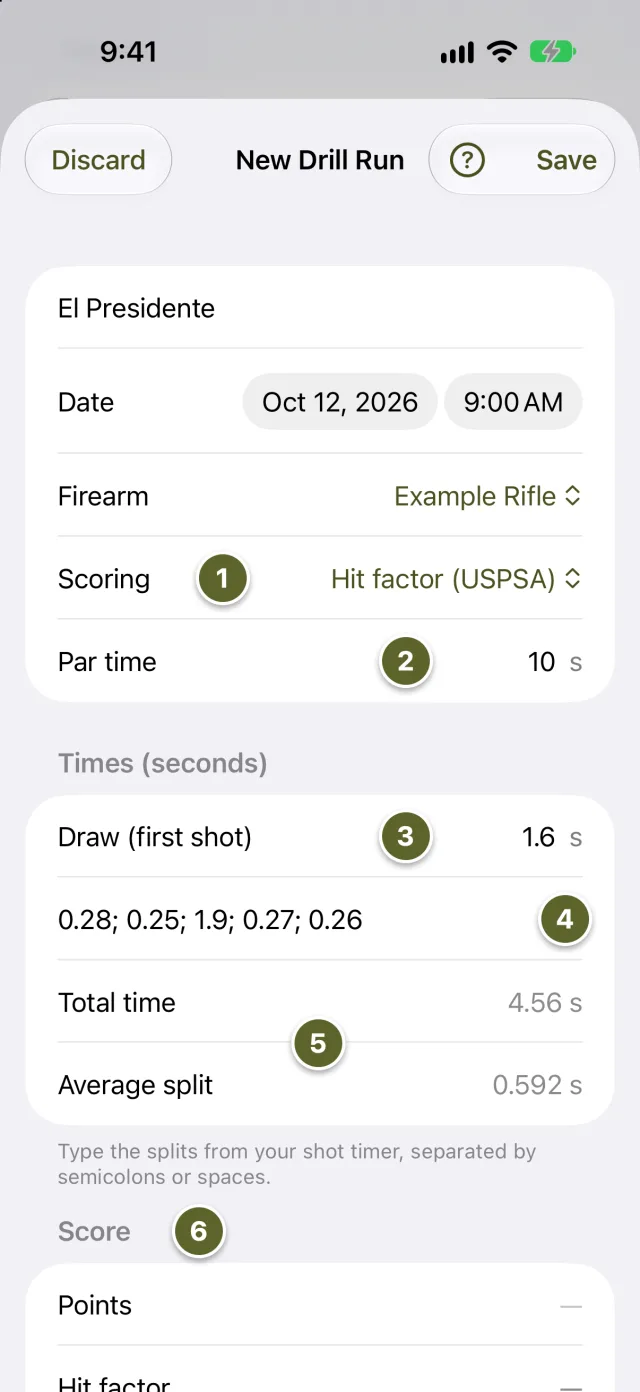
Keeping the counts in Gun Diary
Gun Diary keeps practice and match days as sessions, and each drill as a drill run with its name, firearm, scoring and the times from your timer. With hit factor scoring, type the points from your zone count and the hits out of shots, and the run shows its hit factor. There are no separate A, C and D fields, so the counts themselves go in the run's notes. The help article on drill runs has the steps, and the matches and drills page shows what else they keep.
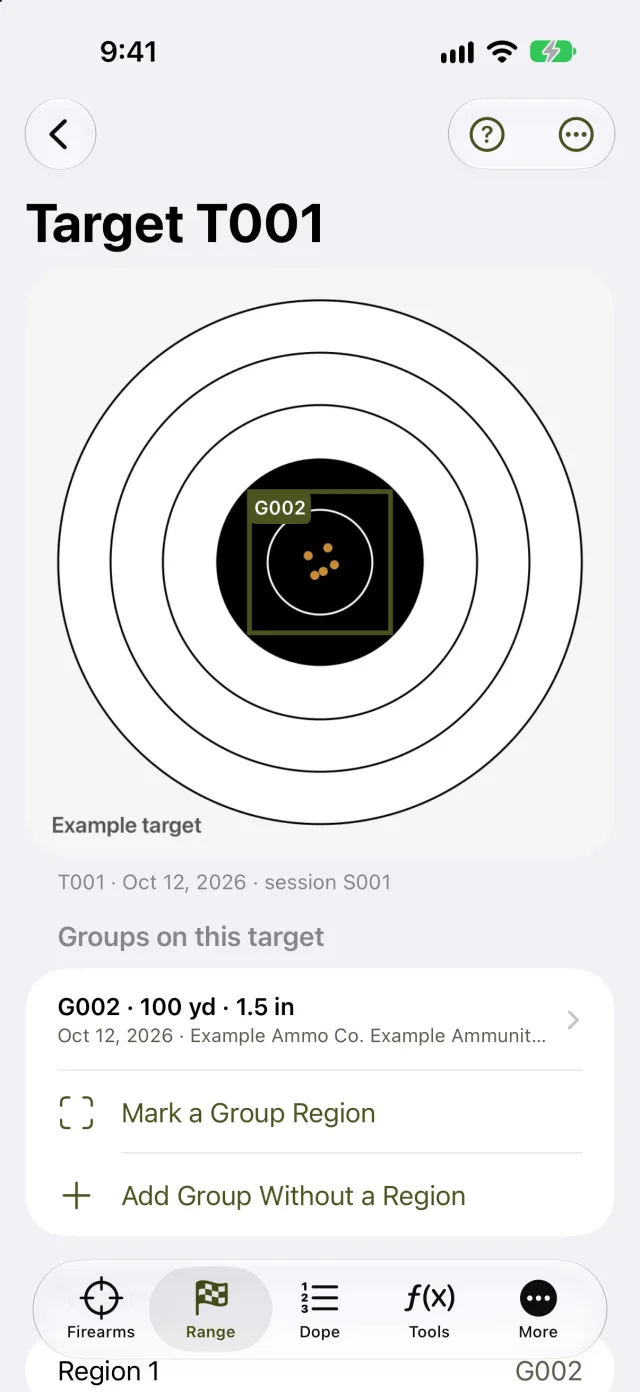
Your USPSA paper targets, photographed
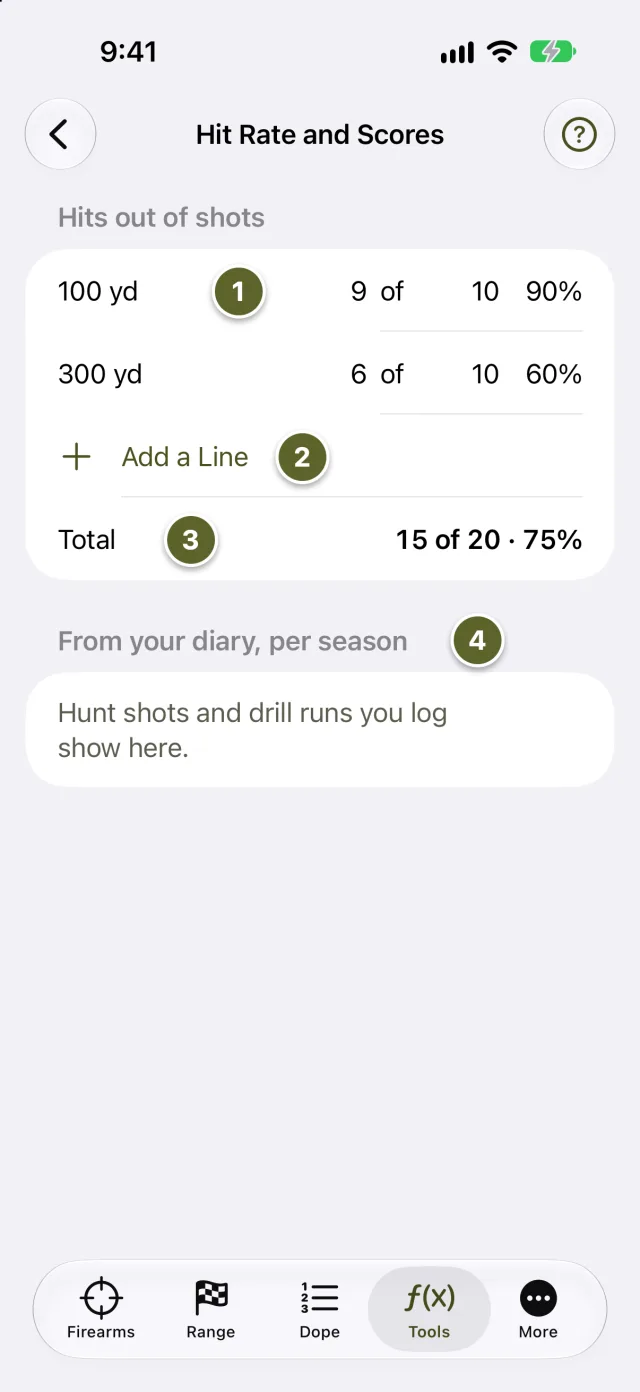
For a quick tally, the free Hit Rate and Scores calculator takes a line per drill or zone, like "A zone: 14 of 20", and shows each percentage and the total. And because a photo settles arguments with your own memory, each photo you add to a session under Targets becomes its own target record, with a number and its own notes; the help on a target and its groups explains how it works. Your records stay on your iPhone or iPad and in your own iCloud, with no account and nothing sent to us.
The bottom line
So, what are the USPSA target dimensions?
The full-size USPSA target is 17.72 by 29.53 inches, with a body A zone of 5.91 by 11.02, a C zone 11.81 wide, the D zone out to the edge, and a 3.94 by 1.97 inch A box in the head. The half-size version halves each measurement, and the IPSC target is the same width but shorter, with no head. A hits score 5, while C and D hits depend on your power factor. Check the current rulebook before you rely on any of these USPSA target dimensions, then keep your practice targets counted by zone, so the numbers you collect mean the same thing every time.
Gun Diary keeps the records you enter. It never predicts bullet drop, wind or a trajectory; your dope is what you proved on paper. Always follow safe firearm handling.
Worried about losing years of records?
No account and no server: your diary lives in your own iCloud, and Export All Data gives you every record and photo, free, any time.
See your dataComing soon to the App Store