
What a deer hunting journal keeps
Picture a shoebox of photos, a few tag stubs and a memory of a buck that weighed somewhere around 140 pounds. That's how a lot of deer seasons get kept, and most of it doesn't survive the years. A deer hunting journal pulls those pieces into one record per animal: what it was, when and roughly where it was taken, the tag, the weight and the photos. It also keeps the hunts with no harvest, which are most of them, so you can see the effort behind each deer and not only the result.
Recording the harvest
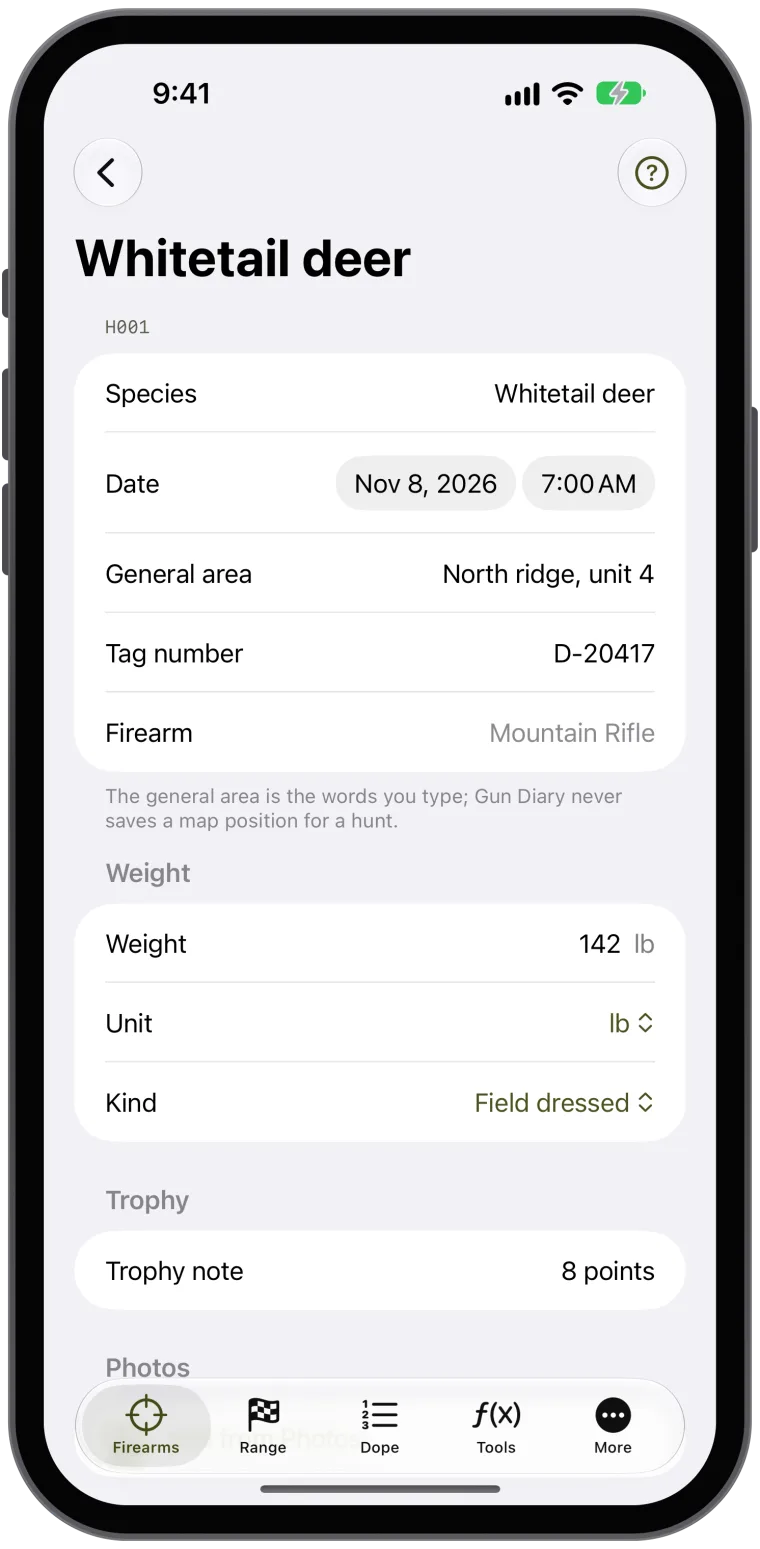
Write the harvest into your deer hunting journal as soon as you can, and fill in the rest as it arrives. The weight often comes back from the processor days later, and the best photo is usually on someone else's phone. That's fine. A record that gets finished a week later is still far better than one that never gets started.
What to record for each deer
Species
Whitetail or mule deer, or your own entry for anything else you hunt.
Date and general area
When it was taken, and the area in words, never a map pin.
Tag number
Your tag or permit number, kept with the record.
Weight and its kind
Live weight, field dressed or boned out, in pounds or kilograms.
Trophy note
Points, length or score, if you keep them.
Photos and notes
The deer, the camp and the story you'll want to tell later.
The kind of weight is the detail people skip, and it's the one that makes years comparable. A field-dressed weight and a live weight for the same deer are different numbers, so a list of weights with no kind beside them can't be compared fairly. The same goes for antler notes: write points the same way every year, and the record will mean the same thing in ten seasons as it does now.
Season by season in one deer journal
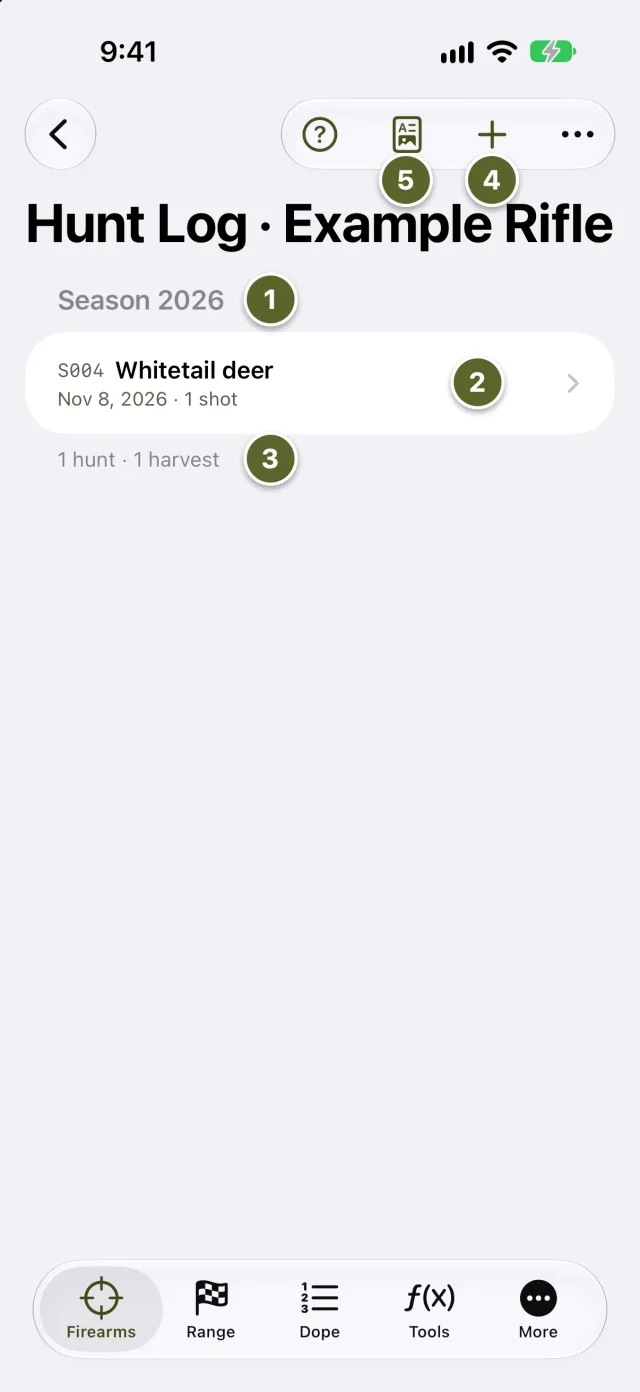
In Gun Diary, every harvest has its own record with these fields, linked to the hunt and the shots that took it. The Hunt Log groups every hunt by season, newest first, with a count of hunts and harvests, and a species filter shows only your deer once you have harvests with a species. Open it from one rifle's dashboard to see just that rifle's hunts, or from the More tab for every firearm.
Seasons follow the calendar year, so a season that runs past New Year shows up in two: December under one year, January under the next. Hunts with no harvest still count and still show their shots. The screens on this page show the app's demo diary, with a made-up rifle and a made-up whitetail, so none of the numbers are real records.
Pro: $69.99 once.
Keeping a first deer for the family
Here's a common one: a son or daughter takes a first deer, and years later nobody can remember the date, the rifle or the weight. A deer hunting journal entry made that evening keeps all of it: the tag number, the photos, the trophy note and a few lines about the morning. Because the place is only the words you type, you can print it or share it with the family without giving away the spot. Your diary has no account and nothing is sent to us; it lives on your iPhone or iPad and in your own iCloud.
Printing a deer hunting log book for the season
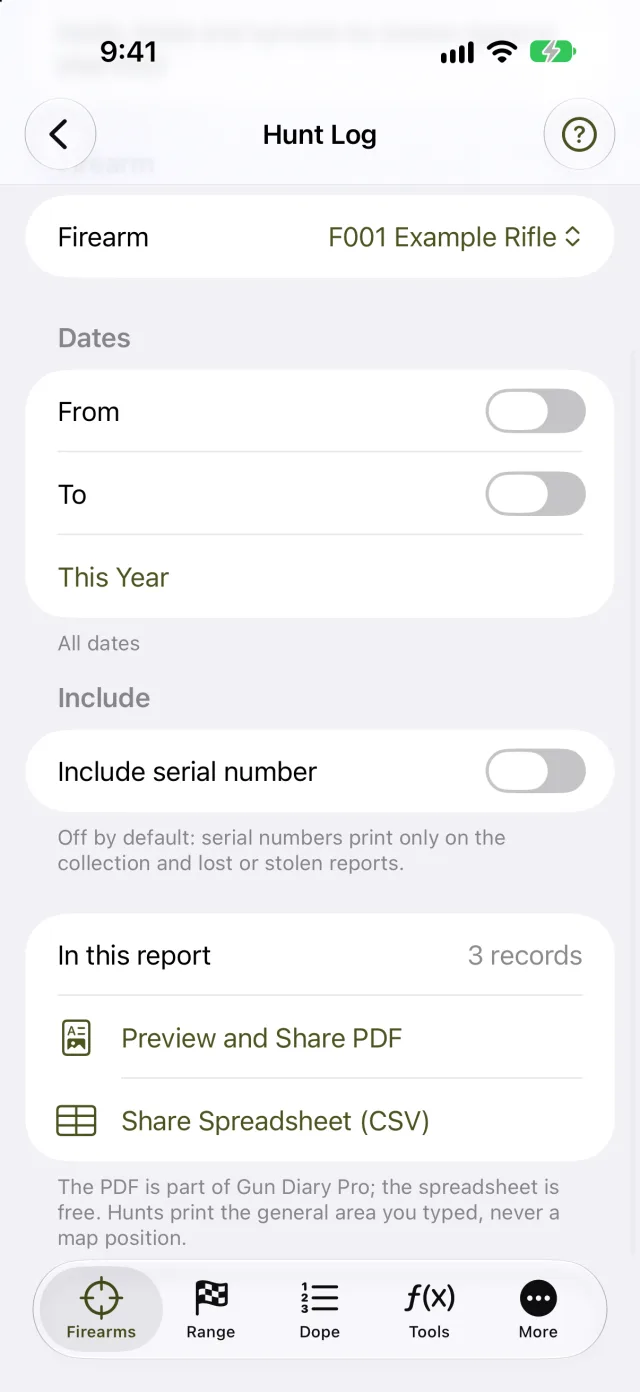
At the end of the season, the Hunt Log report turns it into pages you can keep. Pick one firearm or all of them, tap This Year, or set From and To when your season crosses New Year. The PDF lists each season's hunts, shots and harvests with the tag and weight, and places print only as the general area you typed. The PDF is part of Gun Diary Pro; the spreadsheet is free, and so is Export All Data.
What your tag must show, and what you have to report after a harvest, is set by your state wildlife agency, so check with yours; the Association of Fish and Wildlife Agencies is a starting point for finding it. Gun Diary keeps your own record, not an official one. Think of the printed season as the family copy of your deer hunting journal, the one that goes in a binder with the photos, next to whatever paperwork your state asks for.
The bottom line
So, what goes in a deer hunting journal?
One record per deer: the species, the date, a general area in words, the tag number, the weight with its kind, a trophy note and the photos, linked to the hunt and the shots. Keep the hunts with no harvest too, and fill in the weight and photos as they come in. Kept this way, a deer hunting journal is still worth reading in twenty years. For the rest of the hunt, see our guides to keeping a hunting journal and a hunting log for every shot.
Gun Diary keeps the records you enter. It never predicts bullet drop, wind or a trajectory; your dope is what you proved on paper. Always follow safe firearm handling.
Every shot and harvest, linked to the dope you used
Zero Check before the hunt and Quick Hunt Log after it. Your spot stays words, never a map pin.
See Zero Check and the hunt logComing soon to the App Store