
What a pattern percentage says about shotgun pattern spread
A shotgun pattern is the spread of pellet holes one shell leaves on a big sheet of paper. The usual way to put a number on it is the pattern percentage: draw a 30 inch circle around the densest part, count the holes inside, and divide by the pellets the shell held. If 287 of 410 pellets land in the circle, that's 70%. A higher percentage means a tighter pattern; a lower one means a wider spread. Every factor below moves that one number, which is why it's the fairest way to compare them.
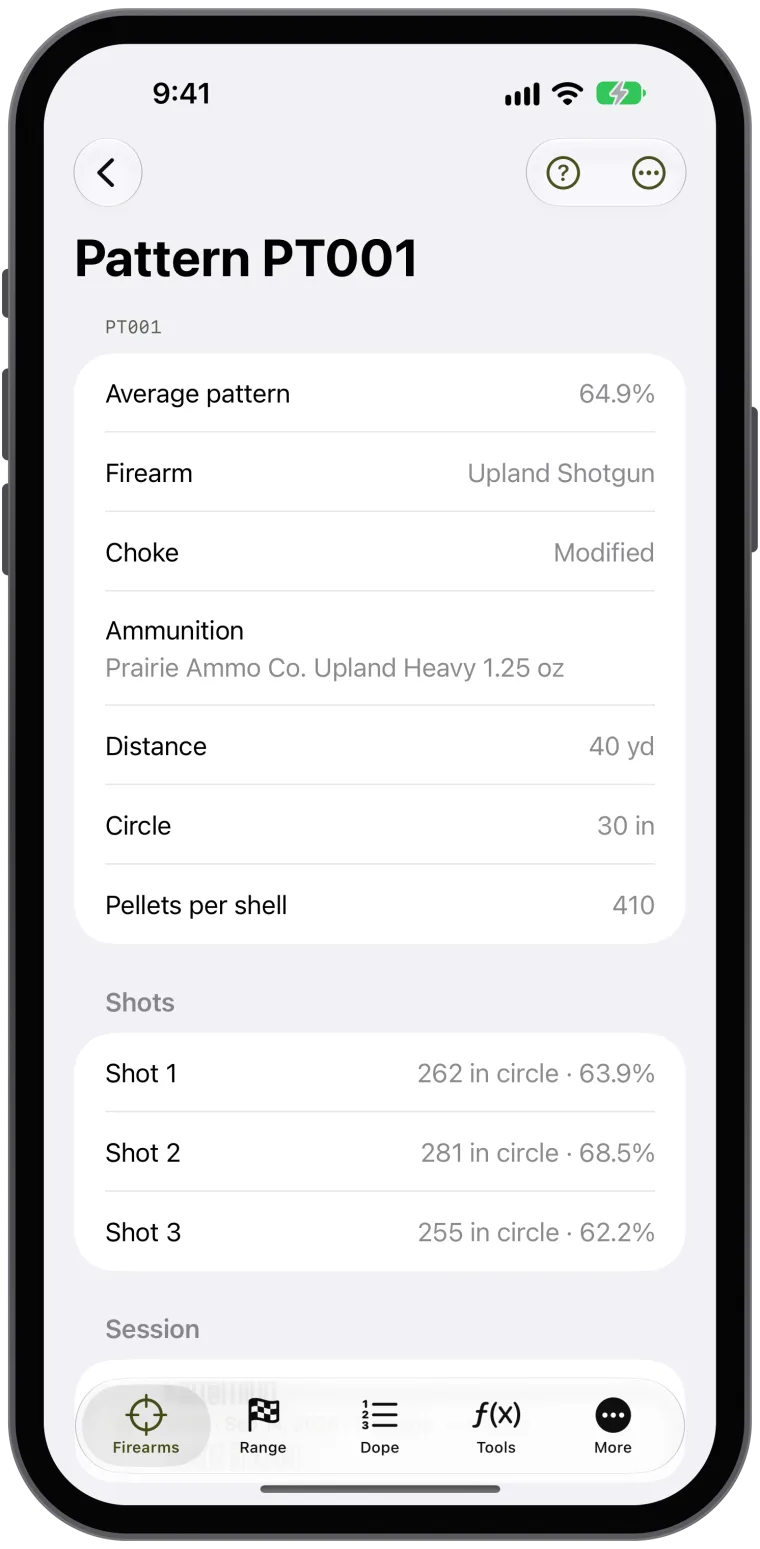
What tightens a shotgun shot pattern, factor by factor
The choke does most of the work, but it never works alone. Think of the pattern as the result of everything that happens between the shell and the paper. Change any one thing and the count in the circle can change with it, sometimes more than a choke swap would. Here are the five that matter most, roughly in order of how much they usually move the number.
Five things that tighten or open a pattern
Choke constriction
How much the end of the barrel narrows. More constriction usually means a tighter pattern, which is why the names run from Cylinder to Full.
The shells and shot size
How much shot the shell holds and how big the pellets are. The same tube can pattern quite differently with two kinds of shells.
Shot hardness and the wad
Harder shot keeps its round shape and tends to fly in a tighter group; softer shot can deform and stray. The wad's design plays a part too.
Distance
The shot cloud keeps spreading the farther it flies, so the same shell gives a lower percentage at a longer distance.
How the choke fits your barrel
Constriction is the difference between your bore and the choke's opening, so the same tube can act a little tighter or looser in another barrel.
Here's a common one: the same Modified tube, two kinds of target shells, and two patterns ten points apart. Nothing about the choke changed, yet the answer to what tightens a shotgun shot pattern came out different. The shells did, and that's the whole reason testing beats guessing. It also explains why two shooters with the same choke name can disagree about how tight it is. Each is reporting what it did in a different barrel with different shells.
What a choke chart shows, and why the numbers disagree
A choke chart lists the share of pellets each choke is expected to put in a 30 inch circle at 40 yards. One widely printed version reads roughly like this: Cylinder about 40%, Improved Cylinder about 50%, Modified about 60% and Full about 70%. Other charts run lower. A Texas Parks and Wildlife magazine guide to chokes gives Modified as 45 to 55% and Full as 65 to 70%, and notes that experts quibble about the exact figures. Treat any chart as a rule of thumb about the order, not a promise about your gun.
So what does a modified choke pattern typically look like? On paper it's a fairly even spread with a denser middle that thins toward the edges, with something like half to two thirds of the shot inside the circle at 40 yards, depending on which chart you trust. In the demo diary shown on this page, Modified tests read 70.2% and 68.8% with one shell, and an Improved Cylinder test with the same shell reads 59.6%. Those are made-up numbers, but real ones often land outside the chart's range, and that's normal. If you want to go further into choke names alone, our guide on which choke gives the tightest pattern compares them side by side.
Does shotgun barrel length affect pattern?
It's a fair question, since longer barrels look like they should hold the shot together. On its own, barrel length usually matters far less than the choke and the shells, which is why a long barrel with an open choke can still throw a wide pattern. What a barrel does change is the bore and how a tube sits in it. Rather than take anyone's word for it, including ours, pattern the barrels you have with the same choke and shells and compare the averages.
Pro: $69.99 once.
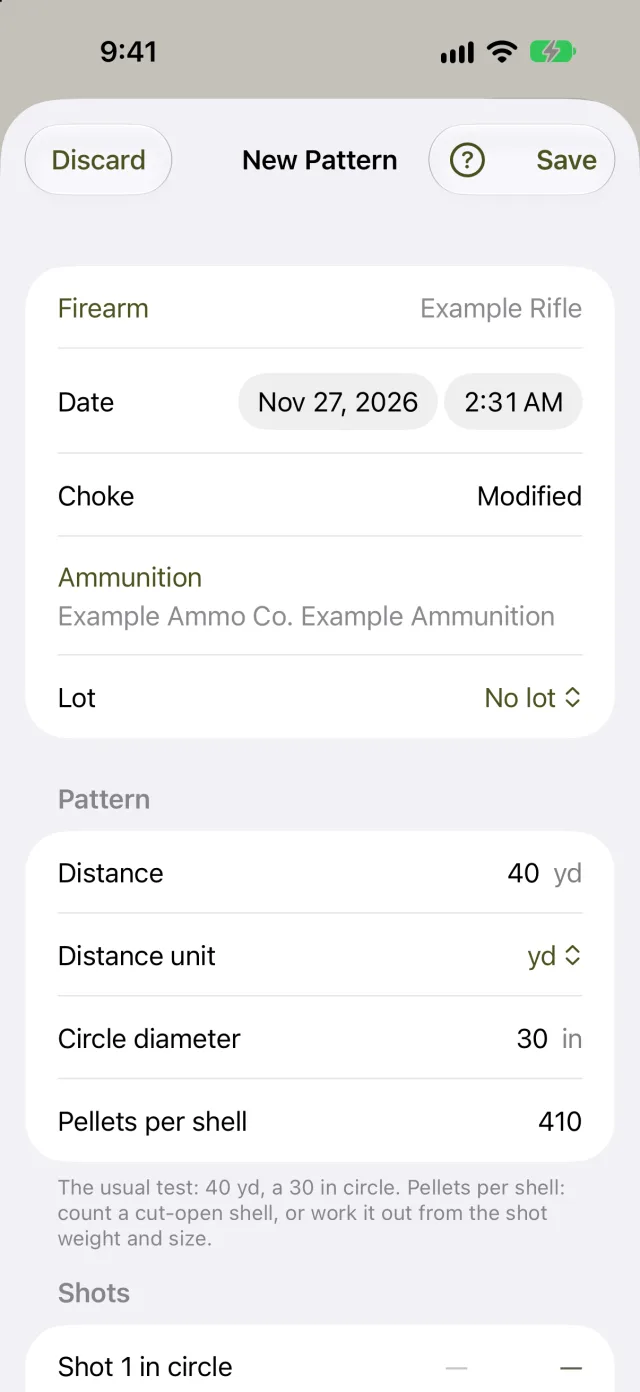
Why only your own pattern sheets answer it
A chart can't know your barrel, your tube or the shells in your bag, so the only honest way to learn what tightens a shotgun shot pattern for your gun is a test. Shoot at fresh paper from a measured distance, usually 40 yards, with the same 30 inch circle each time, and count three or more sheets per choke and shell. Our guide on patterning your shotgun at the board covers the counting, and the one on the distance to pattern a shotgun explains when shooters move the sheet closer.
The record matters as much as the shooting. One sheet proves very little, since a single pattern can be off by several percent from the next. Write down the choke exactly as it's stamped, the shells and their lot, the distance, the circle and the pellets per shell, plus each sheet's count. Note anything the number can't show: a hole in the pattern, where it centered against your aim, a gusty day. With that, a comparison next season starts from facts instead of memory.
Keeping pattern tests in Gun Diary
Gun Diary is one easy way to keep those records on an iPhone or iPad. Each test keeps the choke, the shells and lot, the distance, the circle, the pellets per shell and the count for every shot, and the app works out each shot's pattern percentage and the average. The shotgun patterns feature shows the whole thing, and the help article on recording a pattern test has the steps. A shotgun's Patterns screen then lists every test under its choke and shells with the averages, so you can see which change tightened the pattern. The screens here show the app's demo diary, with made-up firearms and makers.
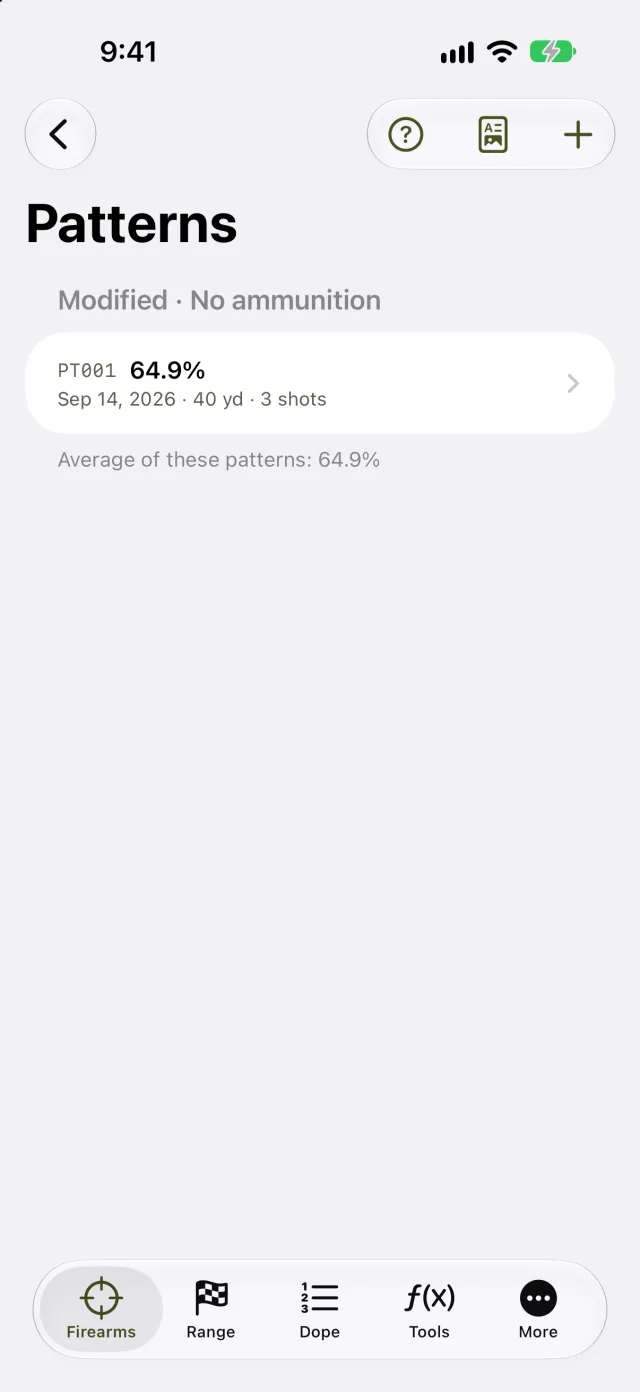
Pattern records are free, and Duplicate for the Next Choke starts the next test with the same shells, distance and circle, so the choke is the only thing you change. The app shows your averages side by side; it doesn't rank chokes or pick one for you. Your records stay on your own devices and in your own iCloud, with no account and nothing sent to us. Notes and photos of each sheet sit with the test, ready when you want to look back.
The bottom line
So, what tightens a shotgun shot pattern?
More choke constriction is the main thing, and the chart order from Cylinder to Full holds as a rule of thumb. The shells, the shot size and hardness, the wad, the distance and the fit of the tube in your barrel all push the number up or down as well. That's why the real answer to what tightens a shotgun shot pattern in your gun comes from your own sheets, tested one change at a time and averaged over several shots. Whether a tighter pattern is what you want is your call. Keep the records, and the comparison will be fair.
Gun Diary keeps the records you enter. It never predicts bullet drop, wind or a trajectory; your dope is what you proved on paper. Always follow safe firearm handling.
Still counting pellets on the back of the sheet?
Log each pattern with its choke, shells, distance and circle, and the percentage works itself out. Shotgun pattern records are free.
Get startedComing soon to the App Store