
The usual answer: 40 yards and a 30 inch circle
The common shotgun pattern convention is a 30 inch circle at 40 yards. You fire one shell at a sheet of paper 40 yards from the muzzle, draw a 30 inch circle around the densest part of the spread, count the pellet holes inside it, and divide by the pellets in the shell. That gives the pattern percentage. Because so many shooters use the same distance and circle, a percentage counted that way can be compared with other tests counted the same way, which is the whole point of having a convention.
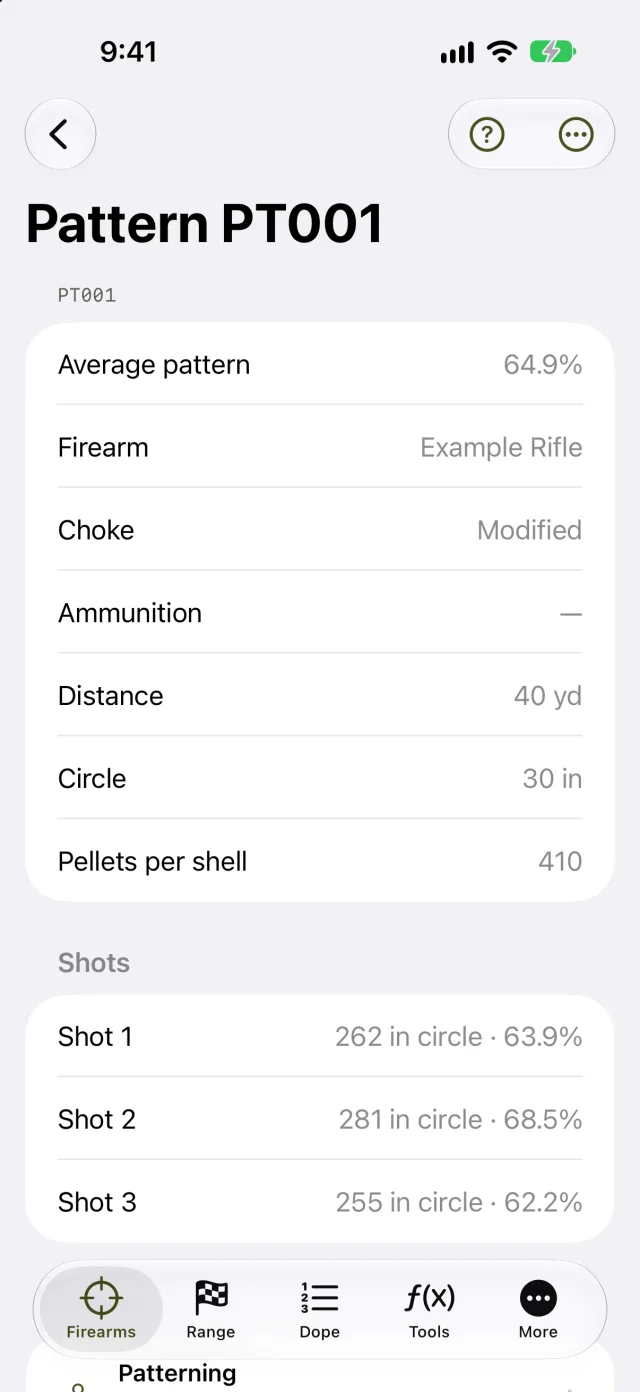
If you've never patterned before, start there. It's the setup most published pattern figures assume, and our guide on patterning a shotgun step by step walks through the paper, the counting and the math. Measure the 40 yards rather than pacing it, since a few yards either way changes the count. Write the distance and the circle size on each sheet before you shoot, even when every test that day uses the same ones.
Why the distance has to travel with the number
The same choke and shell put a larger share of the shot inside a 30 inch circle at 30 yards than at 40, because the spread hasn't had as far to open. So a 75% pattern at 30 yards and a 65% pattern at 40 aren't proof that one setup beats the other. They may be the same gun, tube and shell, counted at two distances. That's the real reason the question of what distance should be used to pattern a shotgun matters: the number only means something next to the distance and circle it was counted at. Distance is one of several things that change a pattern, and our guide on what makes a shotgun pattern tighter covers the rest.
When shooters pattern at a different distance
Beyond the convention, there's no single rule for what distance should be used to pattern a shotgun. Plenty of shooters test at other distances, and the usual reason is simple: they want to see what the gun does at the distance they expect to shoot. Clay shooters may compare chokes for the distances different stations or courses need. That distance is the shooter's own decision, and nothing here suggests what it should be. What keeps those tests useful is recording them honestly, so that next season you know exactly how each one was counted.
27 calculators, your numbers.
Write these down with every pattern
Distance and unit
Measured from the muzzle, in yards or meters.
Circle size
The circle you counted inside, usually 30 inches.
Choke and shells
The tube's name and the shells, with their lot if the box has one.
Pellets per shell
Counted from a cut-open shell or worked out from the box.
Each sheet's count
Every shot, not just the average.
How to pattern a shotgun for turkey
Turkey hunters often test closer than 40 yards and count inside a smaller circle, often 10 inches, around the densest part of the pattern. Mississippi State University Extension's guide on patterning a shotgun for turkey hunting describes that method and suggests labeling each target with the shell, distance and choke. The arithmetic is the same either way. Just compare only patterns counted with the same circle at the same distance, and leave the 30 inch tests in their own column.
What distance to pattern a shotgun in Gun Diary
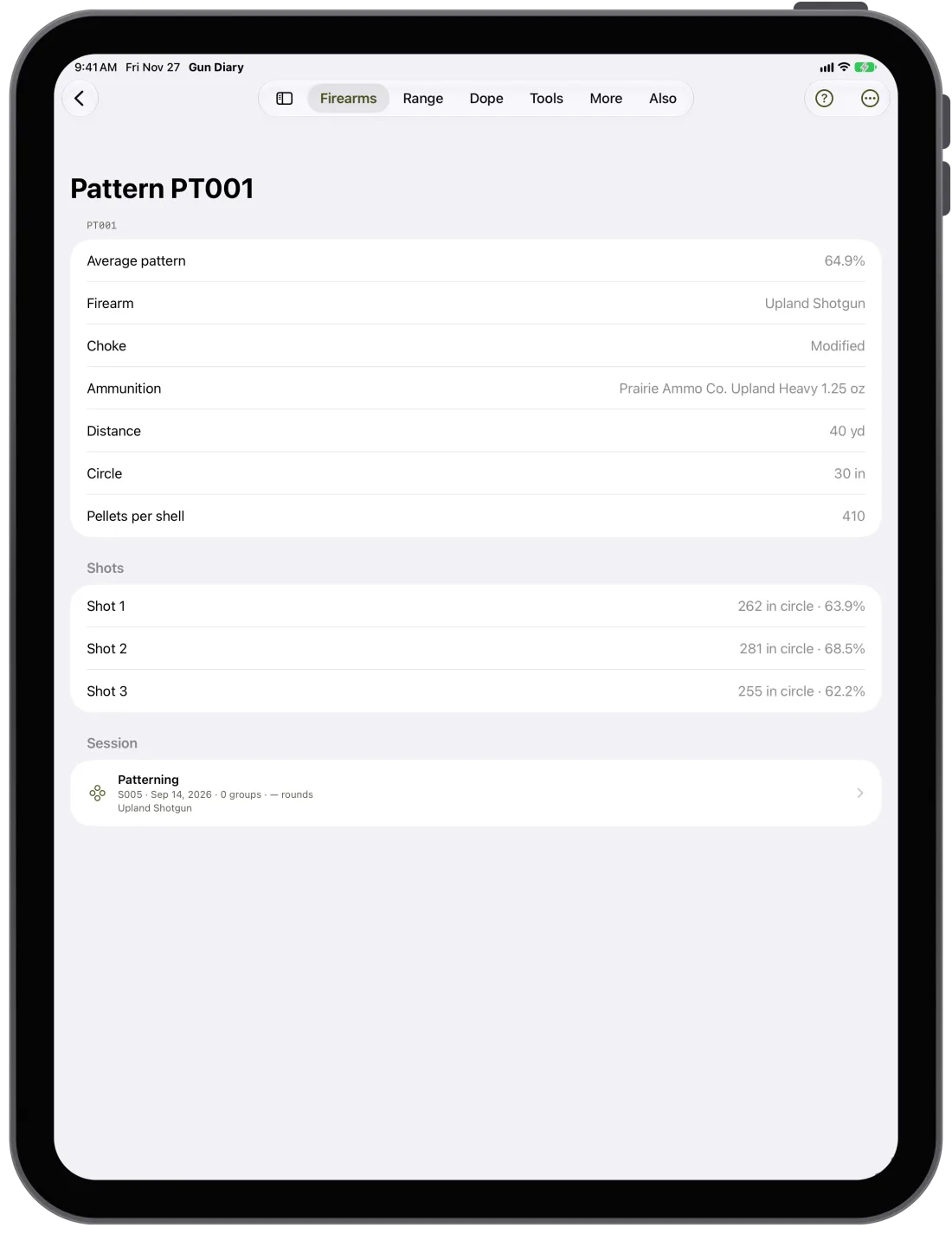
In Gun Diary, a new pattern starts at 40 yd with a 30 in circle, so a new shotgun owner can begin without knowing the convention. Type your own distance, switch the unit to meters, or change the circle, and the record keeps them. Clear the distance and it goes back to 40, because a pattern always has a distance and a circle. The shotgun patterning feature page shows the rest, and these screens are from the app's demo diary, with made-up firearms and makers.
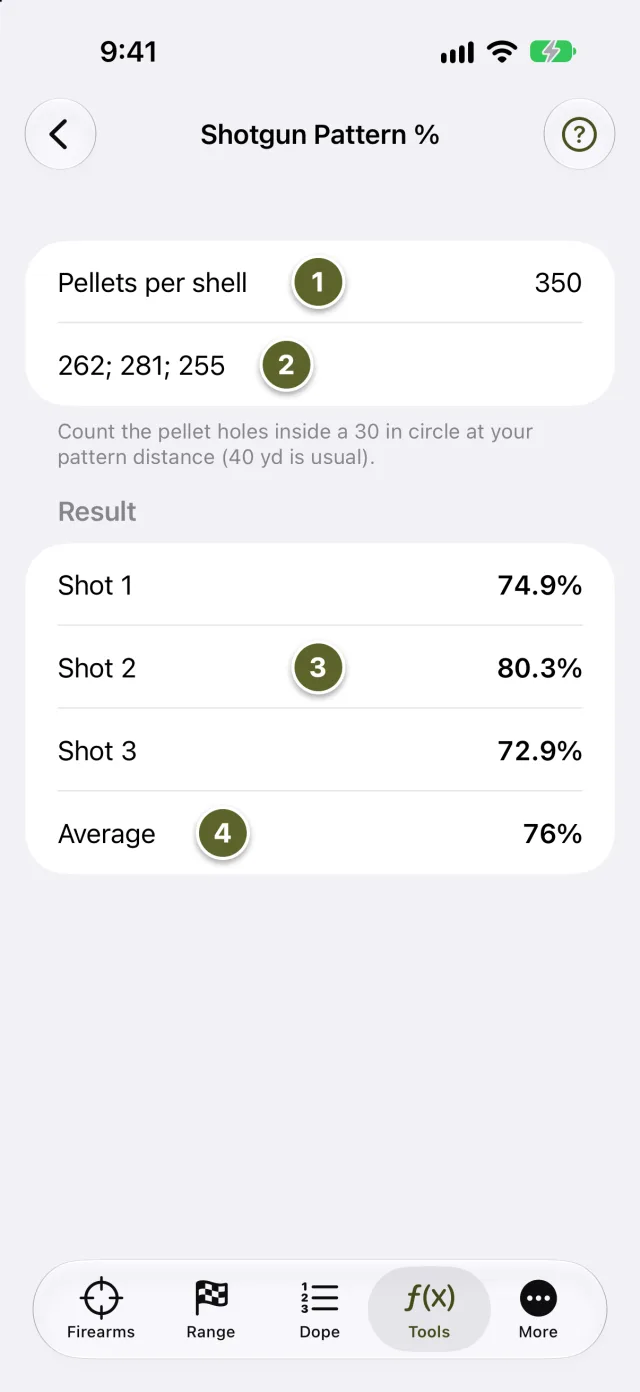
One thing to watch: a shotgun's Patterns screen groups tests by choke and shells only, not by distance. A 30 yard test can sit right next to a 40 yard one with the same tube, so check the distance on each row before you compare averages. For a quick check without saving anything, the Shotgun Pattern % calculator on the Tools tab does the same arithmetic from typed counts. Pattern records are free, and they stay on your iPhone or iPad and in your own iCloud, with no account and nothing sent to us.
Once your tests are recorded with their distances, comparing chokes becomes a matter of reading the right rows. Our guide on which choke patterns tightest covers that comparison from your own averages. Keep the old tests too. A dated record, with the distance and circle beside every number, is how you notice later whether a gun, a tube or a box of shells has changed.
The bottom line
So, what distance should be used to pattern a shotgun?
The usual answer is 40 yards with a 30 inch circle, and it's the right place to start, because it's what makes tests comparable. Many shooters also pattern at the distance they expect to shoot, and turkey hunters often use a smaller circle; that choice is yours. Whatever you settle on, what distance should be used to pattern a shotgun matters less than writing it down: the distance, the circle, the choke, the shells and every count, so the numbers still mean the same thing next season.
Gun Diary keeps the records you enter. It never predicts bullet drop, wind or a trajectory; your dope is what you proved on paper. Always follow safe firearm handling.
No signal at the range?
Everything works offline. Log the session, photograph the target, and finish the details at home. One firearm free.
See how to get startedComing soon to the App Store